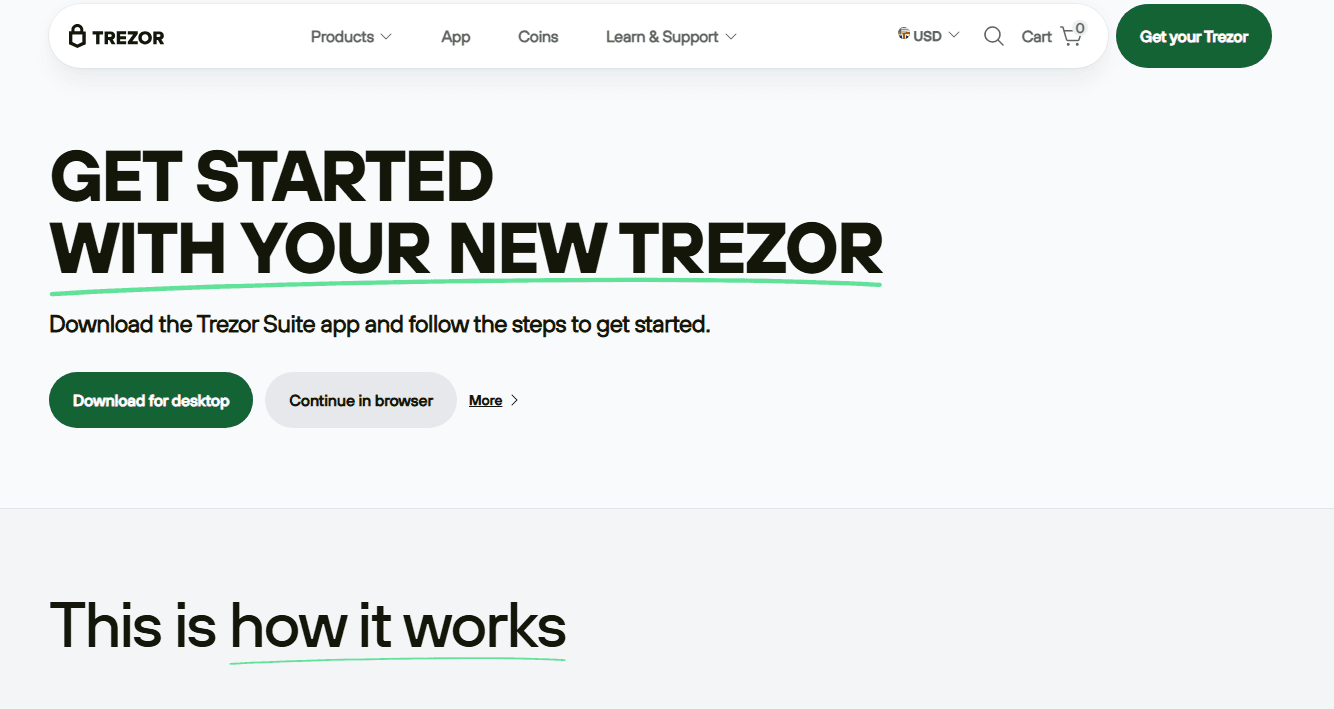
Trezor Suite: The Definitive Guide to Managing Cryptocurrency Safely
Managing cryptocurrency requires both control and caution. While digital assets offer unparalleled freedom, they also come with responsibility: mistakes can lead to irreversible losses. Trezor Suite is the official companion software for Trezor hardware wallets, designed to provide a secure and user-friendly environment to store, send, and manage cryptocurrency while keeping private keys offline.
This guide will cover everything about Trezor Suite: installation, setup, features, advanced functions, security practices, troubleshooting, and best practices. Whether you’re new to crypto or a seasoned investor, understanding Trezor Suite is essential to protecting your digital wealth.
Understanding Trezor Suite
Trezor Suite is a desktop and web application that acts as the interface between your Trezor hardware wallet and the blockchain. It allows you to manage multiple cryptocurrency accounts safely, track your portfolio, and perform transactions—all without exposing your private keys online.
Key functionalities include:
Viewing balances and transaction history in real time
Sending and receiving cryptocurrency securely
Organizing multiple wallets and accounts
Tracking portfolio performance
Installing and managing blockchain apps
Signing transactions offline
Unlike software wallets that store private keys on your computer or in the cloud, Trezor Suite keeps keys offline on the hardware device, minimizing exposure to hacking or malware attacks.
Trezor Hardware Wallets
Trezor Suite works with two primary hardware wallets:
Trezor One – A beginner-friendly wallet that supports most major cryptocurrencies.
Trezor Model T – A premium version with a touchscreen, advanced security, and broader coin support.
Both devices protect private keys offline, making Trezor Suite a secure and convenient interface to manage your digital assets.
Installing Trezor Suite
To start using Trezor Suite:
Visit trezor.io/suite
Download the version compatible with your operating system (Windows, macOS, Linux)
Run the installer and follow the setup instructions
Security Tip: Always download the software from the official website. Third-party downloads may compromise your wallet.
Connecting Your Trezor Wallet
After installation:
Connect your Trezor device via USB.
Enter your PIN to unlock the wallet.
Open Trezor Suite; the software should automatically detect the device.
For Model T users, the touchscreen allows direct verification of transactions and settings, improving both security and convenience.
Setting Up or Recovering a Wallet
When opening Trezor Suite for the first time, you have two choices:
Create a New Wallet – Generates a 12–24 word recovery seed and allows you to set a PIN.
Recover an Existing Wallet – Use your existing recovery seed to regain access to your previous wallet.
Important: Never enter your recovery seed online or on a computer. All sensitive actions happen directly on the Trezor device.
Features of Trezor Suite
Trezor Suite provides a full range of features for both beginners and advanced users.
1. Account Management
Add multiple cryptocurrency accounts
Organize wallets efficiently
Sync balances and transaction history automatically
2. Sending and Receiving Funds
Generate secure addresses for deposits
Send funds with on-device verification
All transactions require physical confirmation to prevent unauthorized transfers
3. Portfolio Overview
Monitor your crypto holdings across multiple wallets
View historical portfolio performance
Export transaction history for personal records or taxes
4. Broad Coin and Token Support
Supports thousands of cryptocurrencies, including Bitcoin, Ethereum, Cardano, Solana, and many tokens
Regular updates ensure compatibility with new coins and tokens
5. Security Enhancements
Offline storage of private keys
PIN protection and optional passphrase
Integration with password managers
Two-factor authentication (2FA) support
6. Firmware Updates
Keep your Trezor device secure and up to date through Trezor Suite
Install the latest firmware to ensure compatibility and access to new features
Security Best Practices
Trezor Suite is designed with multiple layers of security:
Offline Key Storage – Protects your private keys from online threats
PIN Security – Prevents unauthorized access
Optional Passphrase – Adds a second layer of protection
Transaction Verification – Requires physical confirmation on the device
Device Authenticity Check – Ensures your hardware wallet is genuine
Even if your computer is infected with malware, your assets remain safe because the keys never leave the hardware wallet.
Trezor Suite for Beginners
Trezor Suite is beginner-friendly, offering:
Easy wallet setup
Simple interface for sending and receiving funds
Clear portfolio overview
Step-by-step transaction verification
This makes it simple for new users to manage crypto securely without needing in-depth blockchain knowledge.
Advanced Features for Experienced Users
For advanced users, Trezor Suite offers:
Custom Transaction Fees – Adjust the speed and cost of blockchain confirmations
Multisignature Wallets – Enhance security by requiring multiple approvals
Third-Party Integrations – Safely connect to exchanges and decentralized finance (DeFi) platforms
Developer Tools – Access APIs for custom applications or integrations
Troubleshooting Common Issues
Some common problems and solutions include:
Device Not Detected – Ensure the device is unlocked, try a different USB port, or update Trezor Suite
Forgot PIN – Multiple incorrect attempts reset the device; recover using your seed
Outdated Firmware – Update to the latest firmware for compatibility
Connection Errors – Use a different cable, USB port, or browser
Wallet Recovery and Backup
If your device is lost, stolen, or damaged:
Obtain a new Trezor device
Open Trezor Suite
Select Recover Wallet
Enter your 12–24 word recovery seed
This restores access to all accounts, balances, and transaction history. Always store recovery seeds securely offline and in multiple locations.
Best Practices for Trezor Suite
Only use the official Trezor Suite software
Never share your recovery seed or PIN
Enable optional passphrase protection
Regularly update firmware
Verify all transactions on the device
Keep backup recovery seeds in secure, separate locations
Trezor Suite vs. Software Wallets
Trezor Suite differs from software wallets in several ways:
Offline Key Storage – Keys never touch the internet
Physical Transaction Verification – Manual confirmation required for every transaction
Layered Security – PINs, passphrases, and device authentication
This makes Trezor Suite one of the safest ways to manage cryptocurrency.
Using Trezor Suite on Mobile
Trezor Suite can be accessed via web interfaces on mobile devices, allowing you to:
Check balances
Monitor portfolio performance
Initiate transactions (confirmation occurs on the hardware device)
This allows flexibility without compromising security.
Frequently Asked Questions
Can I use Trezor Suite without a hardware wallet?
No. The hardware wallet is essential for offline key storage.
Is Trezor Suite cloud-based?
No. All sensitive data stays on the hardware device.
What happens if I forget my PIN?
After multiple incorrect attempts, the device resets. Use your recovery seed to restore access.
Can I manage multiple wallets?
Yes, you can manage multiple wallets and accounts simultaneously.
How do I safely update firmware?
Use Trezor Suite’s built-in updater. Avoid third-party downloads.
Conclusion
Trezor Suite, in combination with a Trezor hardware wallet, offers a secure, intuitive, and comprehensive platform for cryptocurrency management. Key benefits include:
Offline storage of private keys
Comprehensive portfolio management
Layered security with PINs, passphrases, and transaction verification
Support for thousands of cryptocurrencies
User-friendly interface suitable for beginners and advanced users